
AR Product Demos: Bringing Retail Technology to Life in Australian Stores
Nov 18, 2025
Introduction
Retail technology in Australia is evolving quickly, with Augmented Reality (AR) now becoming a standard tool for improving the in-store experience. By allowing customers to view and interact with digital product versions in real environments, AR creates a bridge between online discovery and physical purchase. NXT Interactive designs and implements AR product demo systems that help retailers deliver interactive, data-backed shopping experiences — whether for furniture, electronics, automobiles, or apparel.
Why AR Product Demos Are Gaining Traction
Customers today expect more than product descriptions or static displays. They want to see how products fit, function, and look before buying. AR makes this possible by projecting life-size 3D models directly into their surroundings.
This approach benefits both sides of the transaction:
For shoppers: A clearer understanding of product size, features, and compatibility.
For retailers: Increased engagement time, better product understanding, and reduced return rates.
With in-store AR screens, tablets, or even mobile apps, retailers can deliver immersive experiences that are informative yet simple to use.
How AR Product Demos Work
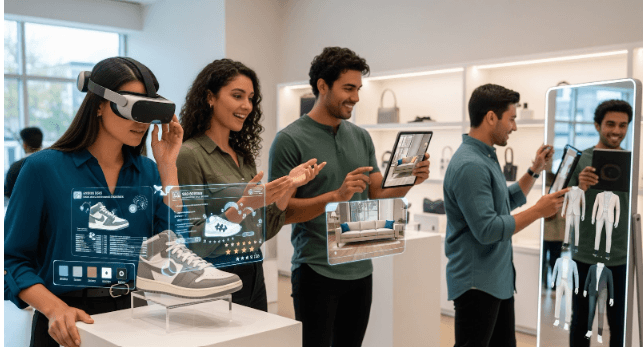
An AR product demo uses a device’s camera to place digital versions of products in the real world. When a customer scans a product code, image marker, or QR tag, a virtual model appears — showing the item’s true dimensions, materials, and interactive features.NXT Interactive builds these solutions to work seamlessly across devices and environments. The applications are optimized for retail floor spaces, shopping malls, and trade show displays, ensuring reliability and fast performance during high customer traffic.
Key Use Cases in Australia
1. Furniture and Home Retail
Customers can use AR tablets to visualize furniture placement and check if it suits their room layout or décor before purchasing.
2. Consumer Electronics
AR showcases allow users to explore device configurations, color options, and connectivity features without needing a physical demo unit.
3. Automotive Showrooms
Car brands use AR kiosks to present model variants, engine details, and interior features, helping customers customize options interactively.
4. Fashion and Eyewear
AR try-on stations enable shoppers to test different looks virtually — increasing convenience and reducing fitting room dependency.
Benefits for Retailers
Improved product visualization for complex or large items.
Higher in-store engagement through interactive exploration.
Reduced operational costs by minimizing physical demo stock.
Data-driven insights on customer preferences and behavior.
Stronger purchase confidence resulting in fewer returns.
These measurable outcomes make AR a long-term investment in customer experience rather than a short-term marketing attraction.
Conclusion
AR product demos are redefining how Australian retailers connect with customers. They bring clarity, convenience, and interaction to every stage of the buying process — helping customers make informed choices and improving conversion rates. Through its AR-based retail implementations across Australia, NXT Interactive continues to help brands create in-store experiences that are engaging, scalable, and measurable.