
Top 7 Emerging Immersive Technologies Redefining Australia’s Event Experiences in 2025
Nov 18, 2025
Introduction
The events industry in Australia continues to evolve rapidly as technology reshapes how audiences engage with content, brands, and experiences. In 2025, organizers are moving beyond standard screens and stage setups toward immersive technologies that merge storytelling, interactivity, and analytics.
NXT Interactive has been observing this shift closely through projects across Sydney, Melbourne, and Brisbane, where event formats now emphasize personalized engagement, real-time data, and spatial immersion. Here are seven emerging technologies redefining event experiences in Australia.
1. Interactive Holographic Presentations
Holographic projection has progressed from experimental to mainstream in Australia’s hybrid conference scene. Event organizers are now using 3D holographic presenters or product models that appear life-sized on stage — ideal for international speakers participating remotely or for visual product launches.
The technology enhances stage presence and ensures audiences stay engaged with content that feels both live and futuristic.
2. 360° Dome Storytelling Theatres
Large-format projection domes are gaining attention at tourism expos, sustainability summits, and innovation pavilions. These 360-degree theatres immerse visitors in narrative experiences — from virtual destination tours to climate simulations — creating a sense of scale and emotion that traditional screens can’t replicate.
The format supports synchronized visuals, surround sound, and spatial storytelling, making it an effective medium for government and public awareness events.
3. AI-Powered Audience Response Systems
Artificial intelligence is helping event organizers move from observation to insight. AI-enabled vision and analytics platforms now track engagement levels through gestures, expressions, or dwell times, providing real-time data dashboards to presenters. This information is used to adjust lighting, sound, or presentation tone dynamically — a practical way to measure audience response without manual feedback tools.
4. Immersive Tunnel Walk-Through Experiences
Interactive tunnels are being used at exhibitions and corporate launches to guide visitors through a structured narrative journey. These tunnels combine LED panels, AR overlays, and motion sensors that react to user movement — changing colors, lighting, or content as participants move through. In Australia, they’ve become popular for sustainability-themed exhibits, innovation showcases, and brand anniversary installations.
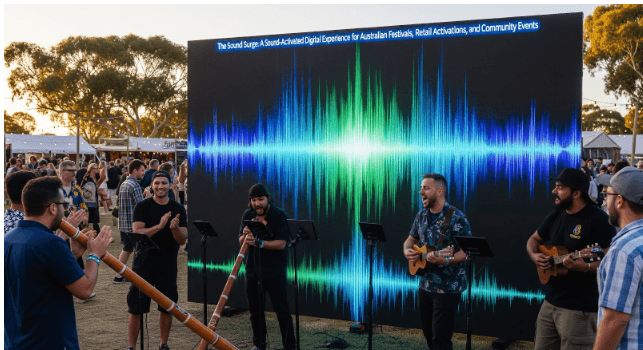
5. Spatial Sound Installations
Directional sound systems allow event producers to create zones where visitors hear different content depending on where they stand. This spatial audio technique is being integrated into art shows, cultural events, and brand activations where storytelling relies on subtle sound design rather than visuals. It enhances immersion without requiring additional screens or devices and helps manage crowd flow through sound-guided navigation.
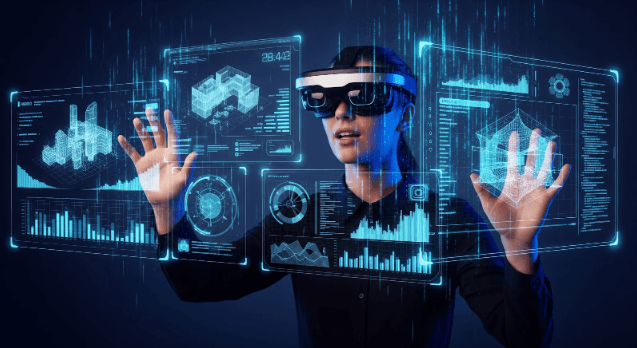
6. Mixed-Reality Data Visualisation Zones
Organizations hosting scientific, engineering, or policy conferences are using mixed-reality data displays to communicate complex information interactively. Attendees can manipulate datasets using gesture or tablet-based controls, viewing 3D visualizations of maps, climate data, or infrastructure models. This application is particularly useful in Australia’s innovation and research-focused events, where understanding large-scale data quickly is critical.
7. Wearable-Triggered Experiences (RFID / NFC Integration)
RFID-enabled wristbands or badges are now common at large-scale events. They can trigger lighting effects, personalized greetings, or content playback when attendees enter specific areas. This technology not only enhances personalization but also supports seamless access management, cashless transactions, and post-event analytics.
Conclusion
Australia’s event industry in 2025 is prioritizing engagement through immersion — using technologies that blend design, interaction, and intelligence.
From holographic speakers to spatial soundscapes, these applications show how events are shifting from visual impact alone to multi-sensory and data-driven experiences.
By designing and delivering such next-generation environments, NXT Interactive continues to help organizers transform how audiences experience stories, spaces, and brands.