
Gesture Walls and Interactive Floors: The New Standard for Event Engagement in Australia
Nov 18, 2025
Introduction
Australian events are increasingly relying on interactive installations to attract and retain visitor attention. Among these, gesture walls and interactive floors have become popular choices for creating high-impact engagement zones in exhibitions, malls, and corporate events.
NXT Interactive develops gesture-controlled and motion-based systems that enable participants to engage with digital environments simply by moving their hands or bodies. These installations combine visual creativity with real-time response, delivering both entertainment and measurable engagement.
How Gesture and Motion Technology Work
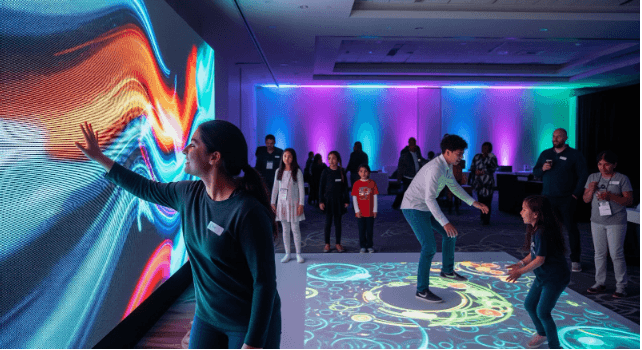
Gesture walls and interactive floors use a combination of motion sensors, infrared cameras, and projection systems to detect human movement. When visitors wave, step, or move within the sensor’s range, the system responds with corresponding animations or visuals on the projected surface.
The technology does not require any handheld device or wearable — interaction is entirely natural. Applications can range from simple interactive games to complex brand storytelling experiences that adapt dynamically to audience movement.
Use Cases Across Australia
1. Trade Shows and Exhibitions
Gesture walls draw attention in high-traffic areas where visitors are typically overwhelmed with information. A responsive visual display captures movement and turns it into interaction — encouraging people to stop, explore, and remember the brand.
2. Shopping Centres and Mall Activations
Retail spaces across Sydney, Melbourne, and Brisbane use interactive floors for promotional campaigns and seasonal activations. These setups attract families and younger audiences, creating a memorable experience that also increases dwell time around participating stores.
3. Corporate and Public Events
At product launches or conferences, motion-based visuals are used to complement presentations, allowing participants to reveal new content or trigger animations with gestures. It’s an effective way to turn passive viewing into active participation.
4. Educational and Museum Environments
Institutions use gesture-responsive displays to simplify learning through play. Visitors can explore topics like geography, science, or culture through movement-based interaction.
Advantages of Gesture-Based Installations
Contact-Free Interaction: Ideal for high-footfall environments and public safety standards.
High Visual Impact: Dynamic visuals ensure strong recall and social sharing.
Customizable Content: Themes, motion patterns, and branding can be tailored for each campaign.
Durability and Easy Maintenance: Hardware and sensors are designed for continuous use.
Analytics Ready: Movement data and dwell-time metrics can be captured for event analysis.
These benefits make gesture and interactive installations suitable for both short-term activations and long-term experiential zones.
How Australian Brands Are Using It
NXT Interactive has collaborated with event agencies and venue partners across Australia to create gesture-driven brand experiences. Recent projects have included motion-activated racing challenges, interactive art walls, and projection-based floor games for family entertainment zones. Each setup is designed with clear engagement objectives — whether to increase footfall, encourage brand recall, or visualize complex ideas in an accessible way.
Conclusion
Gesture walls and interactive floors have moved from being experimental event features to practical audience engagement tools. They combine technology, movement, and design to create experiences that are inclusive, memorable, and data-driven. For Australian organizers and brands aiming to enhance participation and visitor interaction, NXT Interactive’s gesture-based installations offer a proven, adaptable way to turn ordinary spaces into active experiences.